Sleep Science & Bedroom Comfort
Adjustable Bases and Sleep: What Changes When You Raise Your Head or Legs?
An adjustable bed can turn one familiar sleeping surface into a series of small experiments. A lifted head, supported knees, or a gently raised leg position may change how your body feels at bedtime. But elevation is not a universal remedy, and a more dramatic angle is not automatically a better one. The most useful setting is the one that feels comfortable, remains comfortable through the night, and does not distract from addressing persistent symptoms.
A bed that moves—and a question worth asking
For generations, the bed has been imagined as a level, still place: mattress, pillow, sheets, lights out. An adjustable base unsettles that picture in a quietly practical way. With a remote or control panel, the head and foot sections can move independently, inviting the sleeper to refine posture rather than simply accept it. A few degrees may be enough to feel different; a substantial incline may feel entirely unlike lying flat.
That flexibility can be appealing for reading, relaxing, or exploring a position that feels more supportive. It also brings a common question into sharper focus: what changes when you raise your head or legs, and how can you tell whether the adjustment is helping? The answer is personal. Body shape, mattress feel, preferred sleep position, health history, and the reason for changing position all matter.
An adjustable base changes the geometry of rest; it does not, on its own, diagnose or treat a health problem. Think of it as a way to test comfort, not as a promise of better sleep. If pain, breathing difficulties, or other symptoms persist, the important next step is appropriate medical advice—not an increasingly steep setting.
What head elevation may feel like
Raising the head section changes the angle of the upper body. Some sleepers find a modest incline more comfortable than lying completely flat, particularly when they want to read or settle into a relaxed position before sleep. Others notice that their shoulders, neck, or lower back feel less at ease once the mattress bends. A position that feels pleasant for ten minutes may not feel pleasant for eight hours, so the distinction between lounging comfort and overnight comfort matters.
Head elevation can also alter how a pillow supports the head. When the bed itself lifts the torso, a tall or heavily stacked pillow may push the chin toward the chest. That can leave the neck feeling strained or make it harder to maintain a natural, comfortable alignment. A good starting point is to use the base for a small adjustment and then reassess the pillow rather than adding height automatically.
For people who experience recurring nighttime discomfort or breathing symptoms, it may be tempting to rely on a raised position as a solution. Yet a position that makes a symptom feel temporarily different does not establish its cause or replace an evaluation by a clinician. New, severe, or ongoing breathing difficulty warrants prompt attention. Sleep position can be one detail to discuss with a health professional, alongside when symptoms occur and what else accompanies them.
What leg elevation may feel like
Raising the foot section can lift the lower legs, change pressure at the knees, and shift how the hips and lower back meet the mattress. A gentle bend may feel relaxing after a long day, while a larger lift can feel constraining or create an unfamiliar pull through the thighs. There is no single ideal angle for everyone; comfort depends on how the whole body responds, not just on whether the feet are higher than the mattress.
Some adjustable bases allow the head and foot sections to move separately. That makes it possible to compare a slight head lift with a slight leg lift, or to try both at once. If you are assessing a position for sleep, make one change at a time. Otherwise, it can be difficult to tell which adjustment made the difference—or whether the combined angle caused a new discomfort.
Leg elevation is not a substitute for medical assessment of ongoing swelling, pain, numbness, or circulation concerns. Symptoms have many possible causes, and the right advice depends on the individual. If a new position leads to tingling, worsening pain, or another worrying change, return to a comfortable setting and seek guidance rather than trying to solve the problem by raising the legs further.
The art of a small adjustment
It is easy to treat an adjustable base like a feature to be explored at full volume: up, down, and up again. A more thoughtful approach is quieter. Begin with a nearly flat position, adjust the head or legs by a small amount, and pause long enough to notice how your body responds. If the control offers preset positions, regard them as convenient starting points rather than personalized instructions.
Check the details: Is your neck relaxed? Do your shoulders feel supported? Is there pressure behind the knees? Does your lower back feel comfortably supported, or does it seem to arch or flatten in a way you dislike? These observations are more useful than assuming that a setting is beneficial because it is labelled “zero gravity,” “anti-snore,” or “relax.” A label describes a preset or intended experience; it cannot guarantee an individual outcome.
Keep the bedding in the conversation, too. A fitted sheet that is too shallow may pull loose as the mattress articulates. A pillow that worked well when the bed was flat may need adjustment when the upper section rises. Sheets designed for an adjustable setup, including a suitable pocket depth and secure elastic, can help maintain a neat fit, but they cannot make an uncomfortable body position comfortable.
How to assess sleep comfort over time
A brief test while awake can reveal obvious pressure or awkwardness, but it cannot tell the whole story. Sleep unfolds over hours, with ordinary changes in position and stretches of wakefulness that may be forgotten by morning. Rather than judging a new setting after one night—or changing it repeatedly—try a simple, low-pressure observation over several nights, provided the position is comfortable and does not conflict with medical advice.
Make a note of the setting and a few practical details in the morning. You might record how long it seemed to take to fall asleep, whether you woke during the night, how comfortable you felt on waking, and whether any particular discomfort was better, unchanged, or worse. These are impressions, not a clinical measurement, but a short record can help you recognize a pattern more clearly than relying on memory alone.
- Change one variable. Adjust the head or foot section, not both, when beginning a comparison.
- Keep the setting modest. A small incline is easier to evaluate than a dramatic change.
- Notice the morning after. Ask whether you feel comfortable, rather than whether the position seemed novel.
- Consider the full setup. Pillow height, mattress feel, fitted-sheet tension, room temperature, and noise can also shape sleep.
- Stop if discomfort increases. A setting should not require you to tolerate pain or unusual sensations.
Sleep quality is influenced by more than posture. Stress, irregular schedules, light exposure, caffeine, alcohol, health conditions, medications, and the bedroom environment can all play a part. A new base may make position more adjustable, but it cannot compensate for every disruption. If your sleep remains poor, consider the broader pattern and discuss persistent problems with a qualified health professional.
Choosing and using an adjustable base thoughtfully
Adjustable bases differ in their range of movement, controls, dimensions, and compatibility with mattresses and bed frames. Before settling on a model, check whether the mattress is suitable for articulation and whether the base fits the room and existing setup. Confirm the size, weight limits, available leg heights, and how the controls work. If two people share a bed, think about whether each sleeper needs an independent position or whether a shared setting is acceptable.
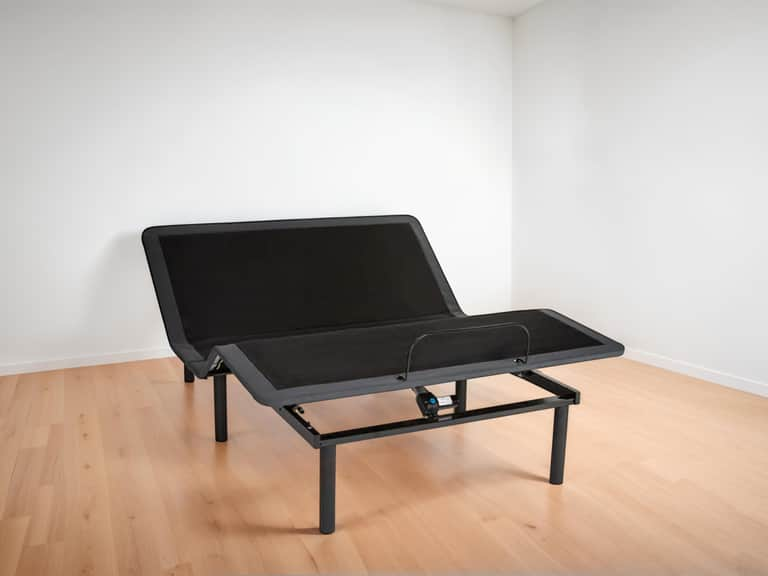
For readers comparing features, the The Clean Bedroom Level 1 Adjustable Bed Base is listed with independent head and foot lift, a wireless remote with customizable presets, and seven adjustable leg-height settings. It is offered in Twin XL, Queen, and King sizes. Those specifications describe the base’s adjustment options; they do not establish that a particular position will improve sleep or address a medical symptom. Compatibility with the mattress and bed arrangement should be confirmed before choosing any adjustable foundation.
Ease of use is a consideration in its own right. A remote that is easy to reach and understand may make it simpler to make small adjustments without turning bedtime into a project. At the same time, elaborate presets are not essential to discovering what feels comfortable. The most useful feature is practical control that supports an uncomplicated routine, rather than the promise of a perfect setting.
As with any bed, the surrounding environment still matters. Keep the bedroom dark, quiet, and comfortably cool if possible. Maintain a fairly consistent sleep and wake schedule, and give yourself a wind-down period that does not depend on screen light or constant adjustment. A well-considered sleep environment is often a collection of modest choices, not a single technological fix.
When a position change is not enough
An adjustable base can help you explore what feels supportive, but persistent symptoms deserve more than experimentation. Contact a healthcare professional if pain continues, disrupts daily life, or worsens; if numbness or tingling recurs; or if you have ongoing breathing difficulties during sleep. A clinician can consider your symptoms in context and advise whether assessment or treatment is appropriate. Do not delay urgent care for severe or sudden symptoms.
It may help to describe what you have noticed: which position you were in, when the symptom occurred, how long it lasted, and whether it happened repeatedly. Share any relevant changes in your sleep or health. The goal is not to arrive with a self-diagnosis, but to offer clear observations that can support a useful conversation.
Likewise, a raised head should not be treated as a replacement for professional evaluation of recurring nighttime breathing concerns. A temporary feeling of comfort does not show that the underlying issue has been resolved. When symptoms are persistent or worrying, medical guidance is the more reliable route.
Common questions about adjustable beds and sleep
Is it better to sleep with your head raised?
Not for everyone. Some people prefer a slight incline, while others find it uncomfortable or notice strain in the neck, shoulders, or back. Start with a modest change and judge it by how you feel over time. If you are considering elevation because of ongoing symptoms, ask a healthcare professional for advice.
Should I raise my legs while sleeping?
There is no universal setting. A gentle bend or lift may feel comfortable to one sleeper and awkward to another. Pay attention to pressure behind the knees, hip comfort, and how your back feels. Persistent pain, swelling, or unusual sensations should be discussed with a clinician.
How long should I test a new sleep position?
There is no fixed trial period that suits everyone. If the position feels comfortable and there are no medical concerns, observe it across several nights while keeping other changes minimal. Stop if discomfort appears or increases. For ongoing symptoms, do not use a home trial in place of professional care.
Does an adjustable base improve sleep automatically?
No. It offers more control over the bed’s position, but better sleep is not guaranteed. Sleep habits, health, stress, room conditions, and mattress comfort also matter. The base is a tool for exploring comfort, not a cure-all.
A more personal definition of “just right”
An adjustable bed makes room for nuance. Rather than asking whether head or leg elevation is universally best, ask what a small change does for your comfort, whether the benefit lasts beyond the first few minutes, and whether the setting leaves you feeling at ease the next morning. Keep the experiment simple, give your observations time, and remember that a flat position is a perfectly reasonable choice if it feels best.
The ideal sleep position is not a fashionable angle or a preset with an elegant name. It is a position that feels comfortable to you, fits your needs, and does not stand in for care when symptoms call for attention. A little more adjustability can be useful; a little discernment makes it meaningful.